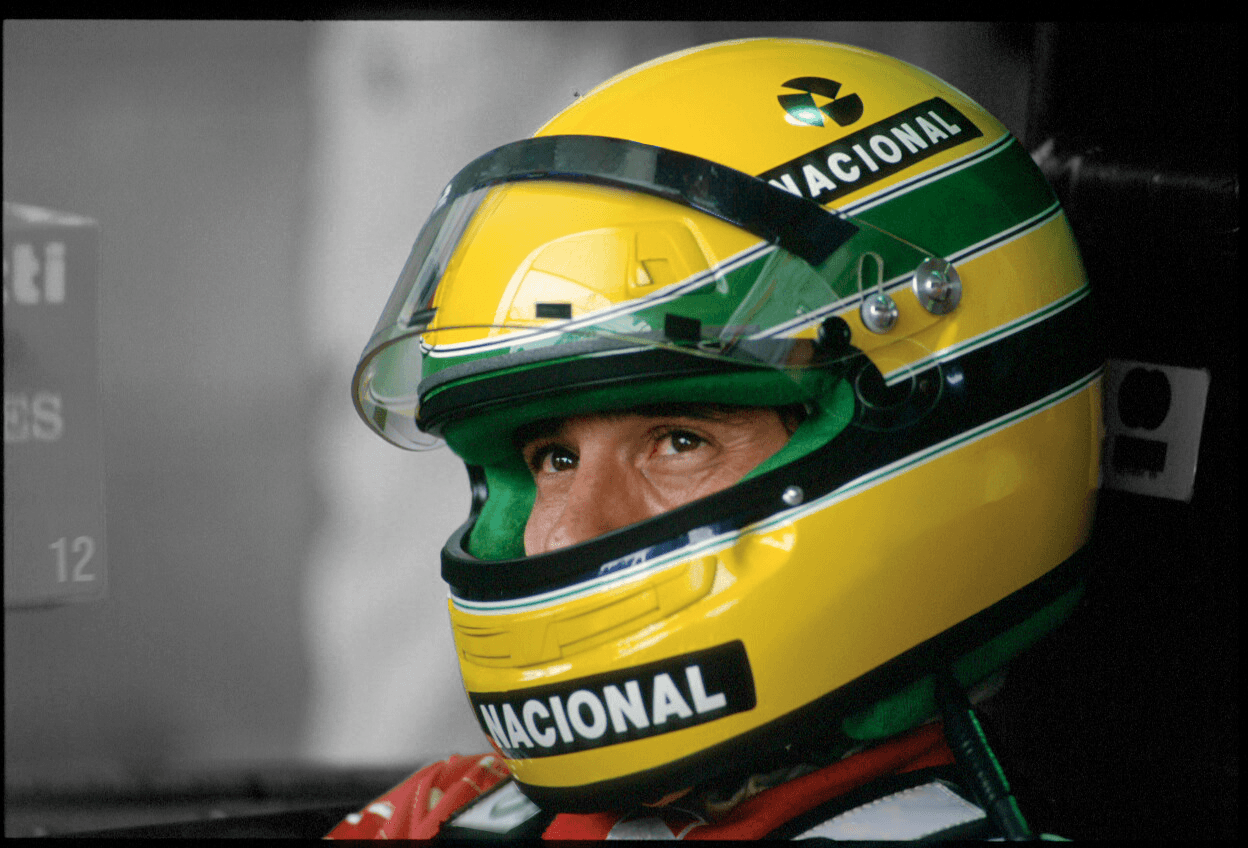
Ayrton Senna
1960 — 1994 · São Paulo, Brazil


He was never simply fast. Ayrton Senna raced as if the car were an extension of his own body and belief — a blend of raw speed, surgical precision, and a devotion to the craft that bordered on the spiritual. Three world titles only begin to explain him. He is the driver every driver since has been measured against, and the champion this collaboration was built to honour.
A kart, a kid, and a calling
Born on 21 March 1960 in São Paulo, Senna found his purpose almost before he could walk. His father built him a tiny go-kart powered by a lawnmower engine; by thirteen he was winning races. Karting was the purest form of the sport he would ever practise — no politics, no money, only the driver and the line.
He crossed the Atlantic in 1981 to prove himself in Britain's brutal junior formulae, sweeping Formula Ford and, in 1983, the fiercely contested British Formula 3 championship. The paddock had already learned his name — and how to spell it, because he now raced under his mother's maiden name, Senna, rather than da Silva.
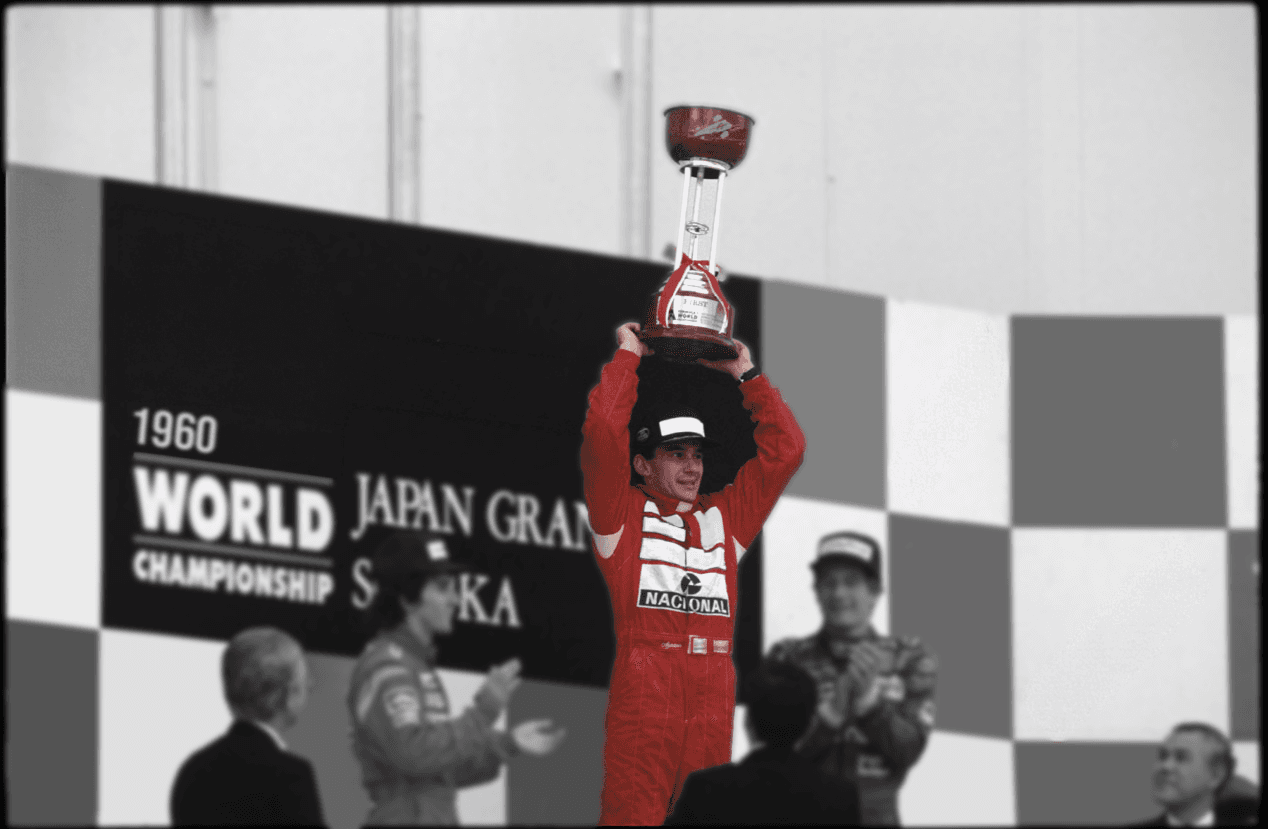
Announced in the rain
His Formula One debut season, 1984, was spent in a modest Toleman — yet at a flooded Monaco he produced one of the most electrifying drives the sport had seen, hauling the little car up to the leader before officials stopped the race. A year later, at Lotus, he took his first win at Estoril in conditions so treacherous he lapped nearly the entire field. Water, it turned out, was where genius became visible.
McLaren, Honda, and three crowns
In 1988 Senna joined McLaren alongside Alain Prost. Their Honda-powered MP4/4 won fifteen of sixteen races; Senna edged his rival eight wins to seven to claim his first World Championship. Two more followed — in 1990 and 1991 — the last making him, at the time, the youngest three-time champion in history. His qualifying laps became folklore — Monaco 1988 above all, a lap so far beyond the rest of the field that it has been studied ever since.
The whole arc
- 1960
Born in São Paulo
Ayrton Senna da Silva is born on 21 March into a well-to-do Brazilian family. At four he is already at the wheel of a go-kart built by his father.
- 1973
Karting debut
He wins his first kart race at 13 and spends the decade dominating South American karting — the purest, most honest racing he would ever know.
- 1981
England calls
Senna moves to Britain to chase single-seaters, winning the Formula Ford 1600 championship in his first season.
- 1983
British F3 champion
A ferocious title fight with Martin Brundle ends with Senna crowned. Formula One is watching.
- 1984
F1 debut · the Monaco rain
In an uncompetitive Toleman he carves through the field in a flooded Monaco Grand Prix, closing on leader Prost when the race is stopped. A legend is announced.
- 1985
First victory
Now at Lotus, Senna wins the Portuguese Grand Prix at Estoril in torrential rain, lapping all but one rival. It would not be the last time water made him untouchable.
- 1988
McLaren · first crown
Partnered with Alain Prost in the Honda-powered MP4/4, McLaren wins 15 of 16 races. Senna takes eight wins and his maiden World Championship.
- 1990
Second title
After the bitter 1989 Suzuka clash, Senna settles the 1990 championship at the same corner — and reclaims the throne.
- 1991
Third title · youngest three-time champion
Seven wins, including an emotional home victory at Interlagos finished with his gearbox jammed in sixth. He becomes the youngest man to win three titles.
- 1993
Donington & a sixth Monaco
An opening lap at Donington in the wet is still called the greatest in history. He wins Monaco for a record sixth time in ageing machinery.
- 1994
Imola
On 1 May, leading the San Marino Grand Prix for Williams, Senna crashes at Tamburello. He dies aged 34. A nation, and the sport, stop.
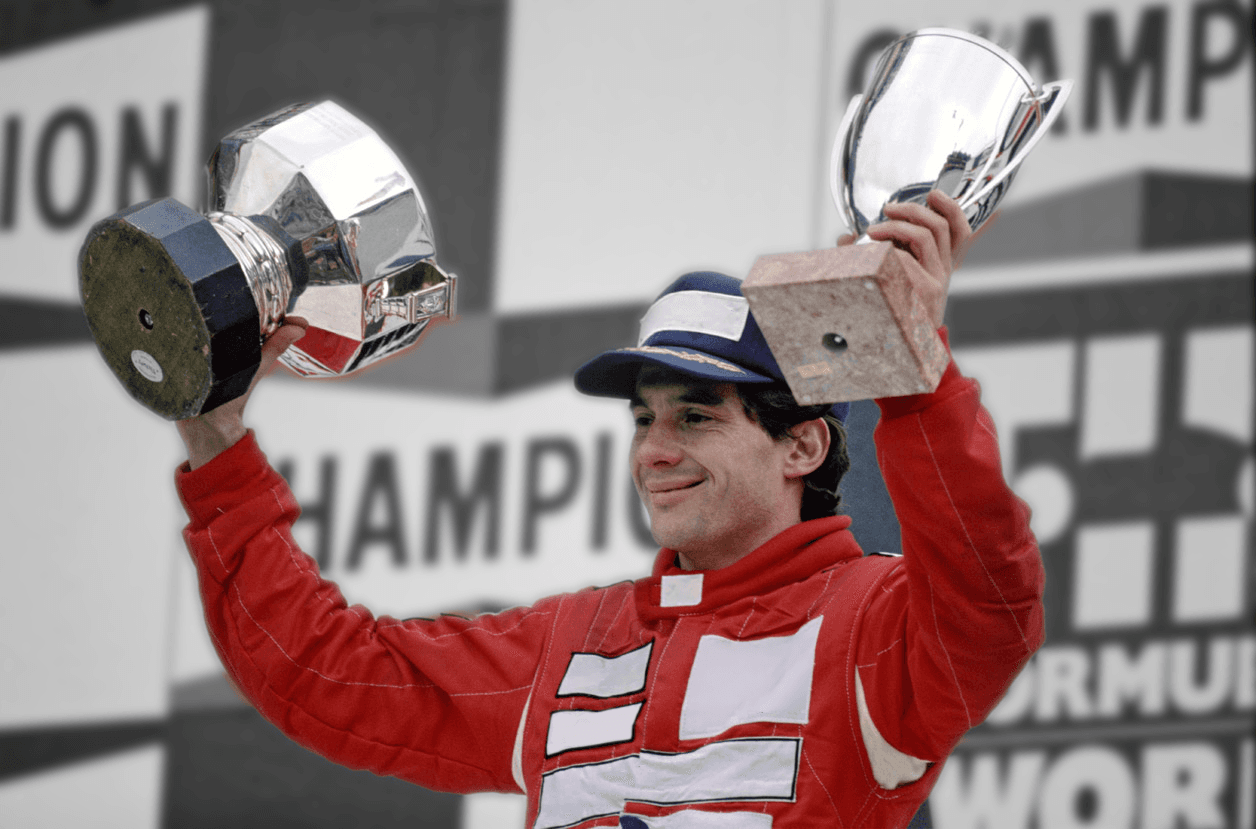
Senna and Prost
No story of Senna is complete without Alain Prost. Teammates turned bitter adversaries, their duel defined an era and boiled over twice at Suzuka — Prost taking the 1989 title in a collision, Senna answering in kind in 1990. It was ruthless, uncomfortable, and magnetic. Years later the two made peace, and Prost would help carry Senna's coffin.
Donington, 1993
On a wet opening lap at the European Grand Prix, Senna passed four cars in a handful of corners to take a lead he never lost. It is still routinely called the greatest single lap in Formula One history. That same season, in a car outgunned by the dominant Williams-Renault, he won Monaco for a record sixth time — sheer will overcoming machinery.
The man behind the visor
Deeply faithful and fiercely private, Senna carried the hopes of a nation. He quietly gave millions to help Brazil's children — a cause his sister Viviane turned into the Instituto Ayrton Senna after his death, which has since reached tens of millions of young Brazilians. Those who worked alongside him were near-unanimous that the measure of the man was taken outside the car, not in it.
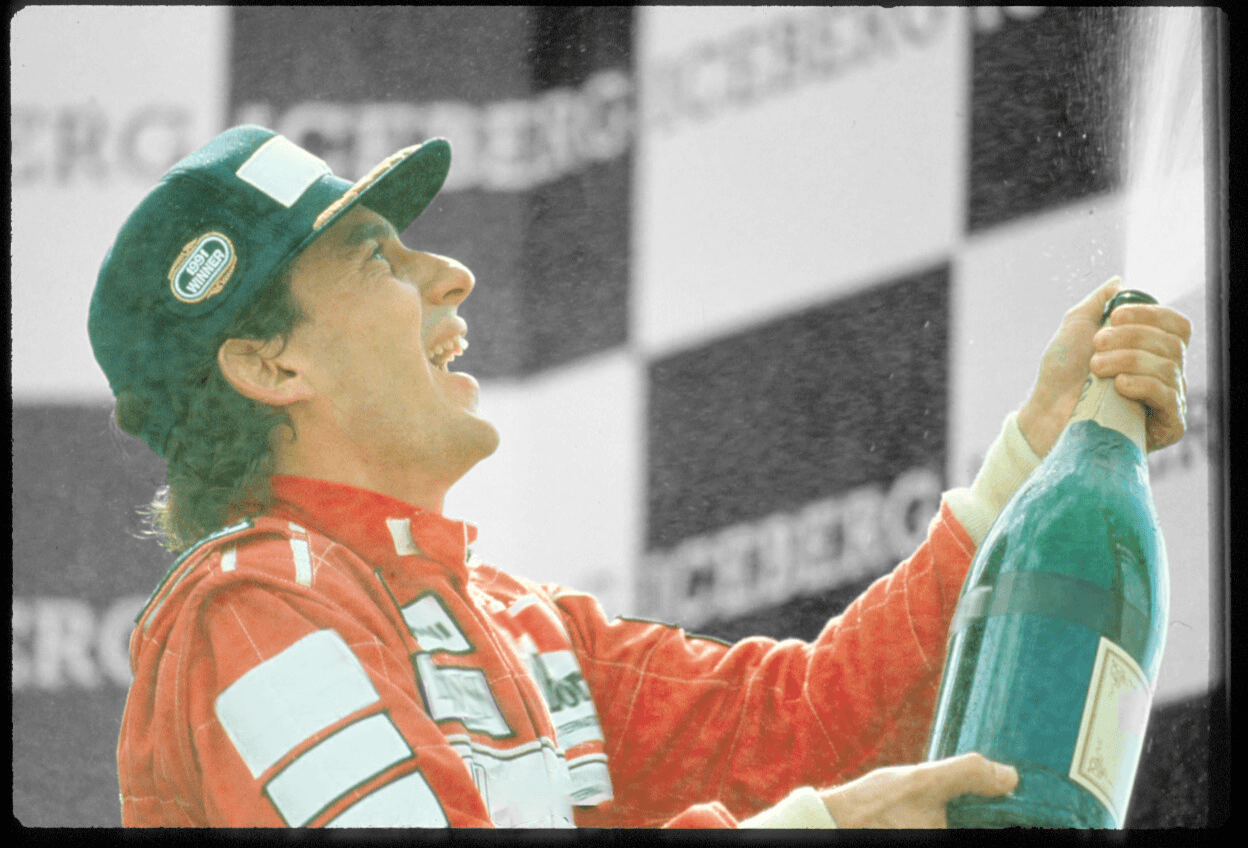
Imola
Leading the San Marino Grand Prix in his first season with Williams, Senna's car left the track at the flat-out Tamburello curve and struck the concrete wall. He was 34. Millions watched it happen. His state funeral in São Paulo brought a nation to a standstill, and the sport changed forever — safety reforms born of that day have saved countless lives since.
Still the benchmark
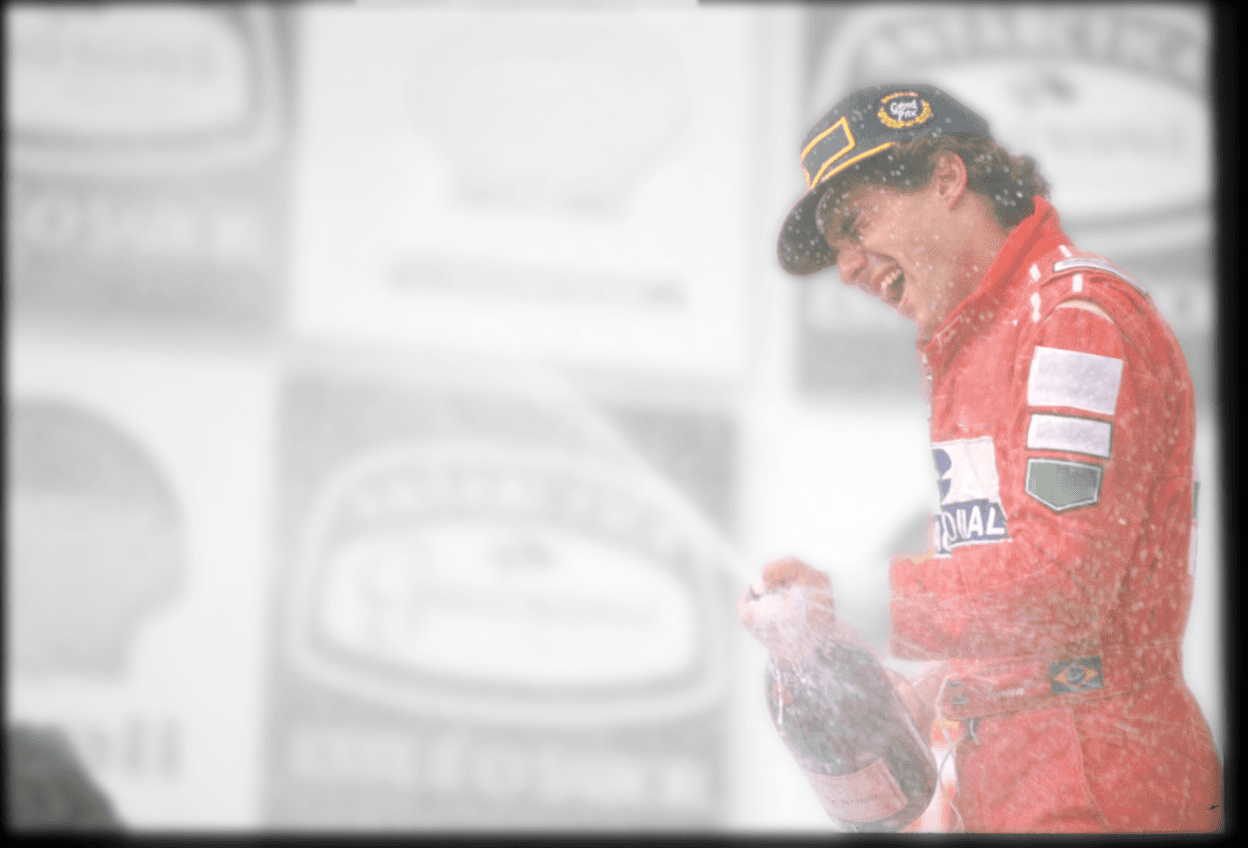
Three decades on, Senna remains the standard — invoked by every generation of champions who followed. Speed can be taught; his kind of belief cannot. That is why his is the name we raise a glass to.
Chummy's Customs × Senna Brands carries that spirit forward through limited-edition Senna shoes. Each purchase includes access to the Cheers to Senna event in Las Vegas and founding membership in The Chummy Club.
In celebration of Ayrton Senna da Silva · 1960 — 1994